Tracing Recovery Intervals Between Contests and Their Effects on Scoring Efficiency Across League Formats
Gisela Jung · Oct 18, 2026
Tracing Recovery Intervals Between Contests and Their Effects on Scoring Efficiency Across League Formats
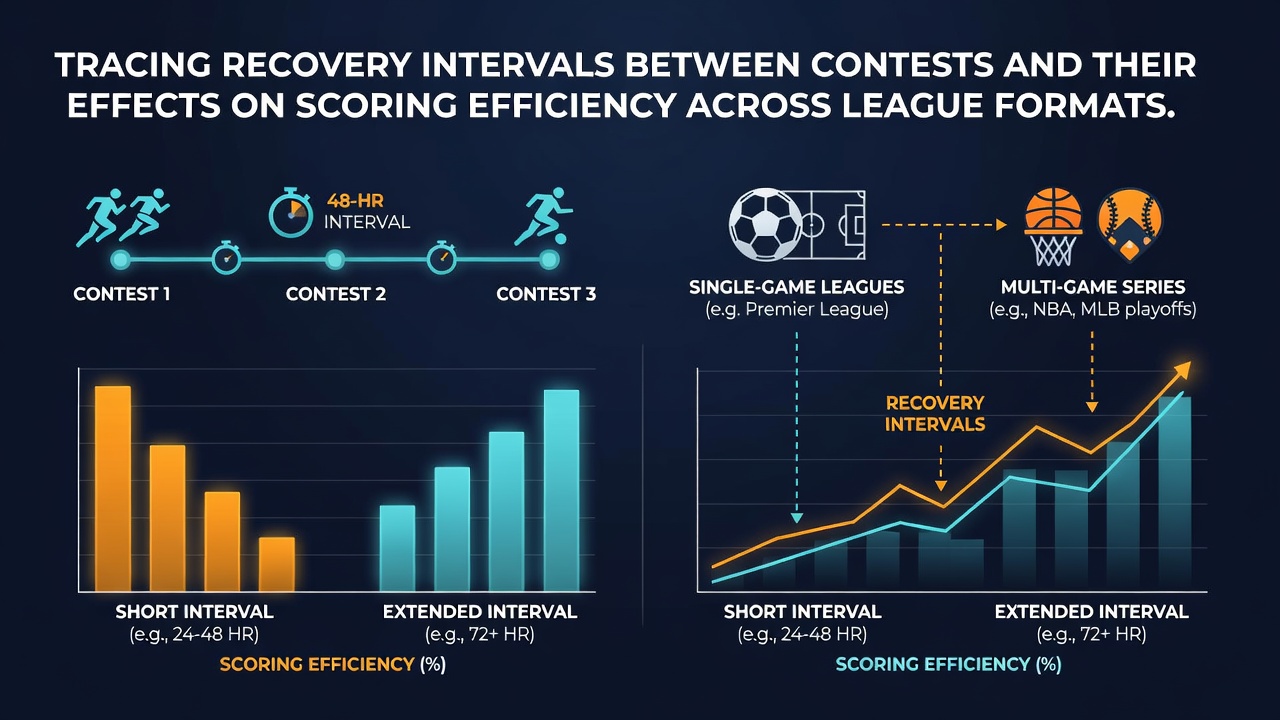
Recovery intervals between contests shape scoring patterns in measurable ways across basketball, soccer, hockey, and football leagues where schedules dictate rest windows ranging from one day to several weeks. Data collected from major competitions shows that shorter recovery periods often correlate with reduced offensive output while longer breaks allow teams to maintain or improve scoring efficiency through restored physical capacity and tactical preparation.
Defining Recovery Intervals in League Contexts
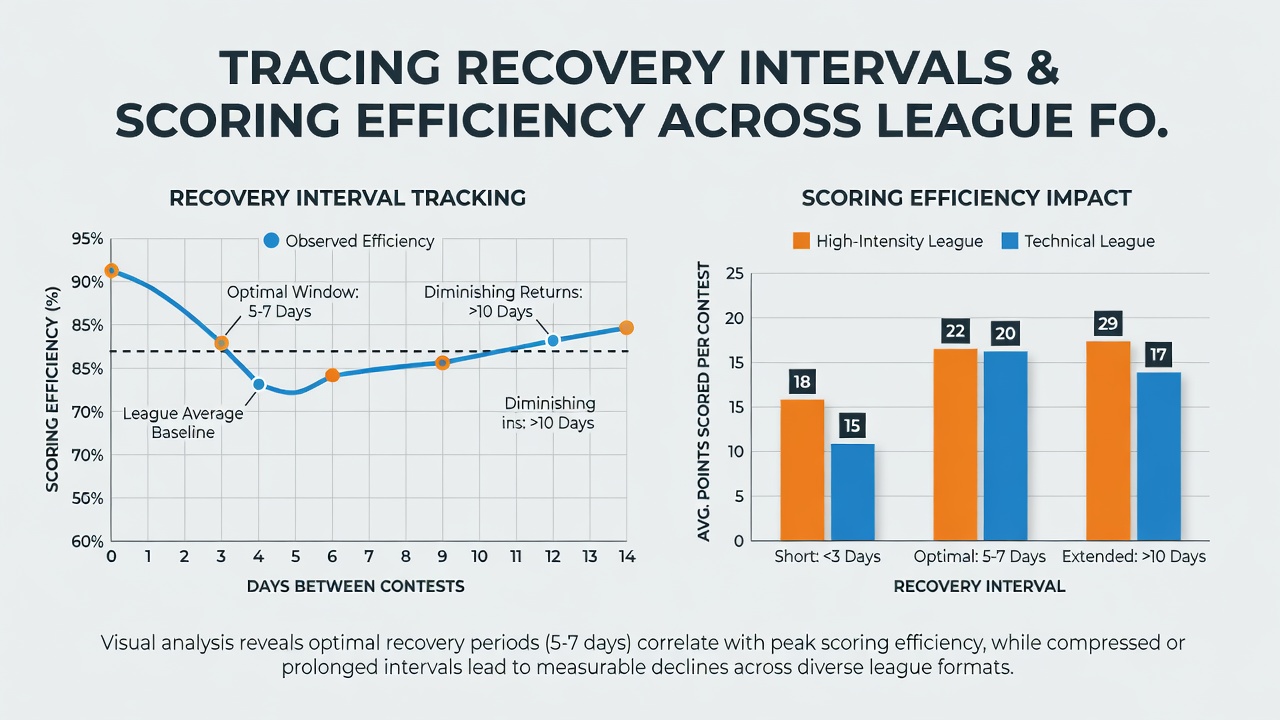
Recovery intervals represent the time between the end of one contest and the start of the next, encompassing travel, training adjustments, and physiological restoration. League formats differ sharply in how they structure these windows, with the NBA scheduling back-to-back games more frequently than European soccer leagues that typically allocate two to three days between matches. Researchers tracking performance metrics across multiple seasons have documented consistent drops in field goal percentages and goal conversion rates when recovery falls below 48 hours in high-intensity sports.
Patterns Observed in Basketball and Hockey Leagues
In North American basketball and hockey circuits, teams playing consecutive nights post fewer points per game on average according to aggregated season statistics from 2023 through early 2026. Analysts note that defensive efficiency remains steadier than offensive output during compressed schedules, suggesting fatigue impacts shooting accuracy and puck control more directly than overall structure. One study tracking NHL contests found that teams with at least two days between games recorded higher shot conversion rates in the opening periods compared to those returning after single-day turnarounds.
Effects Across Soccer and Football Formats
Soccer leagues operating under FIFA calendars and domestic schedules provide longer average recovery windows yet still experience measurable dips in scoring when matches cluster around international breaks or cup replays. Data from major European and South American competitions indicates that squads traveling across time zones with limited rest show reduced expected goals in subsequent fixtures. American football presents a contrasting model where weekly games allow extended recovery, though short weeks following Monday night contests have produced documented declines in passing yardage and red-zone efficiency per league tracking reports.
Observers note that October 2026 schedules across multiple leagues will again test these dynamics during periods of fixture congestion caused by expanded tournament qualifications and broadcast demands. Performance databases compiled by academic groups continue to highlight how recovery length interacts with player age, position demands, and travel distance to influence final scorelines.
Data Sources and Measurement Approaches
League organizations and independent research bodies compile recovery and scoring statistics through standardized tracking systems that record minutes played, distance covered, and shot quality. According to findings released by the Australian Institute of Sport, athletes in team sports demonstrate clearer improvements in scoring metrics after 72-hour recovery windows compared to shorter intervals. Similar patterns appear in datasets maintained by university sports science programs in Canada and the United States, where multi-year reviews link rest duration to offensive production across different competition structures.
Those examining these trends often compare intra-league variations, such as how playoff formats compress schedules relative to regular seasons. Evidence from these comparisons shows that scoring efficiency rebounds more quickly in leagues that incorporate designated rest protocols or bye weeks. What's notable is the consistency of these patterns across continents despite differences in rules and playing surfaces.
Additional Factors Influencing Outcomes
Travel fatigue combines with recovery intervals to affect scoring in leagues spanning large geographic areas, while weather and venue conditions add further variables. Researchers have mapped how these elements interact in studies covering both indoor and outdoor sports, revealing that indoor leagues experience slightly smaller scoring drops from short recoveries than outdoor equivalents. Case examples from recent seasons illustrate teams that adjusted training loads during brief intervals and sustained higher offensive outputs as a result.
Conclusion
Recovery intervals between contests continue to serve as a measurable variable in scoring efficiency across basketball, soccer, hockey, and football league formats. Comprehensive tracking by sports organizations and academic institutions demonstrates repeatable associations between rest duration and offensive metrics, with patterns holding through schedule changes projected into late 2026. These observations provide a factual basis for understanding performance fluctuations tied directly to contest spacing rather than other influences.