Venue Dynamics and Their Correlation with Success Rates Across Diverse Athletic Formats
Katja Beck · Aug 22, 2026
Venue Dynamics and Their Correlation with Success Rates Across Diverse Athletic Formats
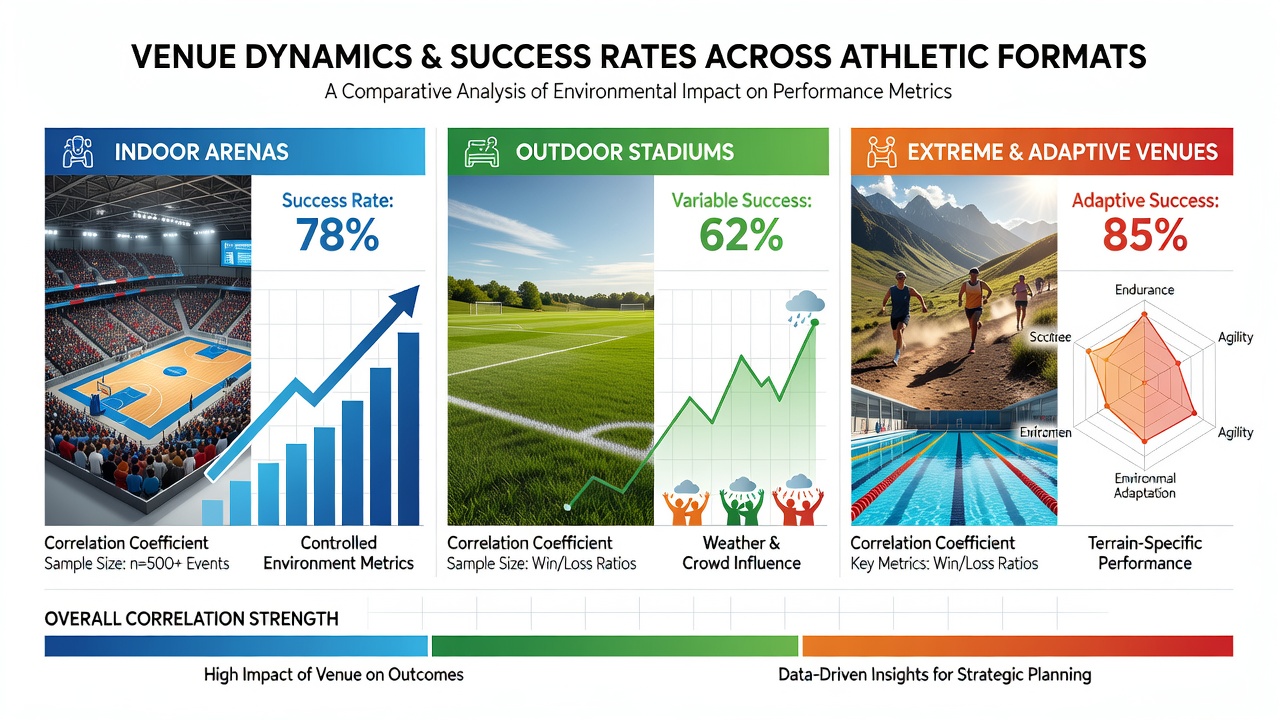
Venue dynamics encompass the physical characteristics, environmental conditions, and atmospheric elements that define competition spaces, and researchers have documented their measurable links to performance outcomes across team and individual sports. Studies tracking win percentages in home versus away settings reveal consistent patterns, with data from professional leagues indicating that home teams secure victories in approximately 55 to 65 percent of matches depending on the sport and location specifics.
Home Venue Effects in Team-Based Competitions
Football matches played in familiar stadiums with supportive crowds often produce elevated success rates for the home side, while basketball arenas demonstrate similar trends through reduced travel fatigue and familiar court dimensions. Observers note that altitude variations in venues like those in Denver create physiological challenges for visiting squads, leading to adjusted training protocols and documented drops in visiting team scoring averages during high-elevation games. In August 2026, league reports highlighted how several clubs adjusted their scheduling strategies to account for these persistent venue-related performance gaps after reviewing multi-season statistics.
Cricket grounds with short boundaries or fast pitches further illustrate how surface conditions correlate with batting averages and bowling economies, and analysts have compiled extensive datasets showing that teams accustomed to specific wicket preparations maintain higher win probabilities at those sites. Rugby fixtures at enclosed stadiums versus open-air fields also display variance in scoring margins, with enclosed environments linked to fewer handling errors according to match logs compiled by governing bodies.
Environmental and Structural Factors in Individual Sports
Tennis tournaments held on clay courts versus grass surfaces produce distinct success distributions among players, because surface speed and bounce characteristics favor different skill sets and historical data from grand slam events confirm that certain athletes achieve career-best win rates only at venues matching their preferred playing style. Swimming pools with varying water temperatures and lane configurations have been studied for their influence on record-breaking performances, and evidence from international meets shows that familiar facilities contribute to marginal gains in split times for competitors who train regularly in similar conditions.
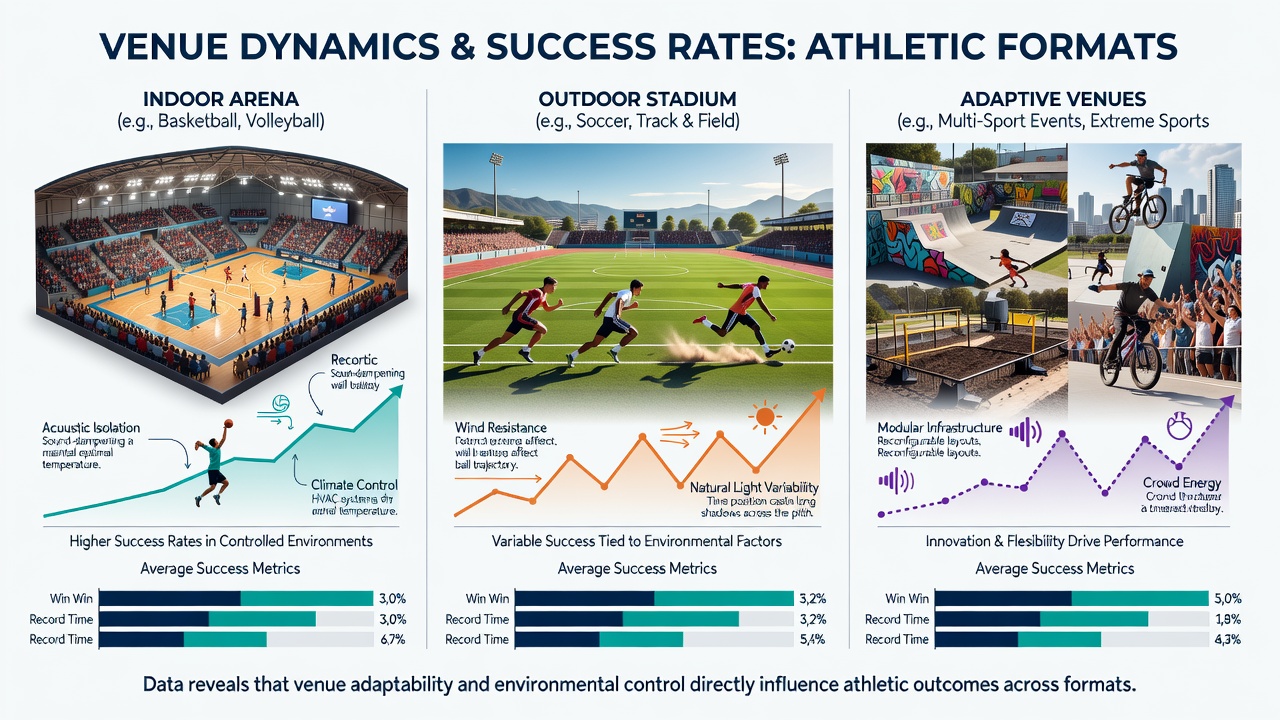
Track and field events at high-altitude venues or those with prevailing wind patterns demonstrate measurable impacts on sprint and distance results, while researchers tracking Olympic qualifying rounds have identified correlations between venue wind speeds and personal best achievement rates. Golf courses featuring undulating greens and specific grass types likewise influence scoring averages, with statistics from major tours indicating that players with prior experience at a given course post lower average scores than first-time visitors.
Crowd Density, Acoustics, and Psychological Influences
Large spectator numbers generate acoustic environments that can disrupt visiting team communication, and quantitative analyses of game footage reveal increased penalty rates for away sides in high-noise stadiums across multiple contact sports. Studies conducted by institutions such as the Frontiers in Psychology research network have quantified these effects through decibel measurements correlated with error frequency data. In contrast, smaller or neutral venues tend to equalize performance metrics between participants, reducing the statistical edge associated with home ground familiarity.
Lighting quality, seating proximity to the field of play, and even temperature control systems within indoor facilities contribute additional variables that researchers have isolated in controlled comparisons. Data compiled by the Australian Institute of Sport across summer and winter athletic seasons shows that optimized venue lighting correlates with improved accuracy in precision-based events such as archery and shooting.
Comparative Analysis Across Global Athletic Formats
Cross-sport examinations highlight that venue effects appear strongest in continuous-play formats like football and hockey, whereas intermittent sports such as baseball exhibit more moderate home advantages tied primarily to pitching mound dimensions and outfield dimensions. Seasonal variations also emerge in the datasets, with winter sports venues subject to ice quality fluctuations that directly influence medal distributions at events held in changing climate conditions.
Those who have examined multi-year performance records across continents note that cultural differences in crowd behavior further modulate these dynamics, although the underlying physical venue attributes remain the dominant measurable factors. Recent compilations released ahead of August 2026 competitions have reinforced the value of venue-specific preparation programs adopted by national training centers worldwide.
Conclusion
Comprehensive reviews of venue dynamics demonstrate clear statistical associations with success rates that persist across football, basketball, tennis, swimming, athletics, and additional formats, driven by measurable elements including altitude, surface type, crowd acoustics, and facility design. Organizations continue to integrate these findings into scheduling, training, and venue selection processes to optimize competitive equity and performance outcomes.